
- Manufacture uniform nanocrystals, nanoemulsions, and liposomes on laboratory, bench and industrial scales.
- Greatly increase the bioavailability and accelerate the onset of action of hydrophobic bioactive compounds.
- Extract active pharmaceutical ingredients from biomass by efficient cell disruption (lysis).
Overview
With Industrial Sonomechanics® patented Barbell Horn® Ultrasonic Technology (BHUT), these processes can be easily implemented at any scale of operation, guaranteeing reproducible and predictable high-quality results.

Case Studies & Application Reports


Blog Posts
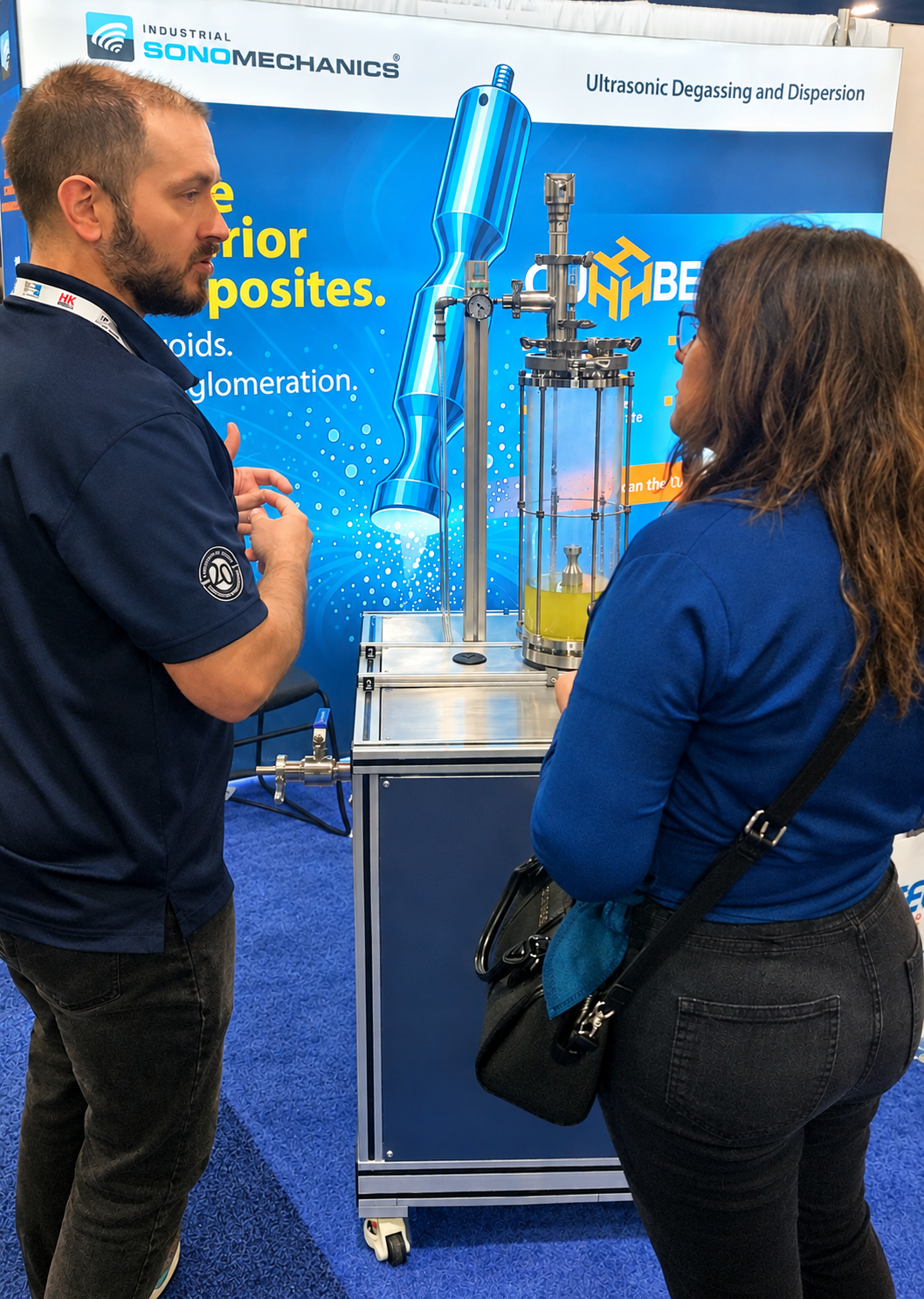
The Composites and Advanced Materials Expo (CAMX) 2026 Recap
Industrial Sonomechanics (ISM) was pleased to exhibit at The Composites and Advanced Mat...
Read more...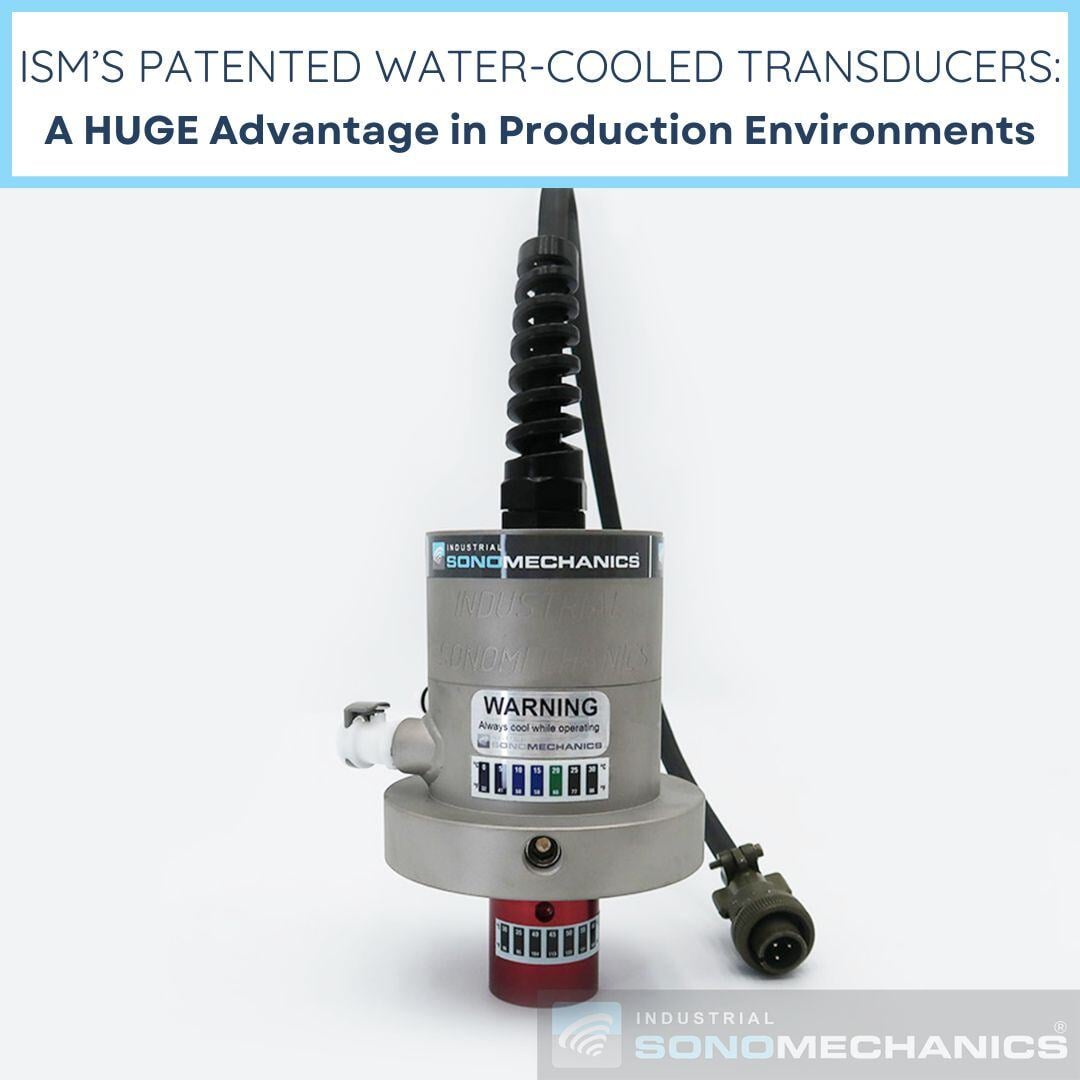
Water-Cooled Piezoelectric Ultrasonic Transducers for Continuous Industrial Processing
At industrial power levels, an ultrasonic transducer must manage the heat generated in i...
Read more...
4th International Process Intensification Conference (IPIC4) 2026 Recap: Ultrasonic Nanoemulsion Manufacturing
Industrial Sonomechanics (ISM) was honored to participate in the 4th International Pro...
Read more...Customer Testimonials
Dominic Notter, Matrix of Life
Videos
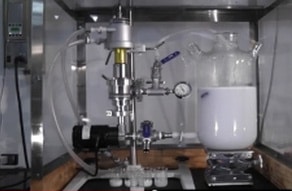
- ISM’s Barbell Horn Ultrasonic Technology Introduction and How We Scale Up
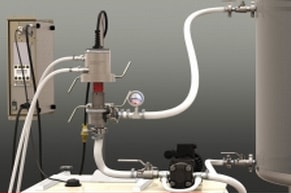


- Translucent Nanoemulsion Produced with LSP-600 and BSP-1200 in the Batch Mode
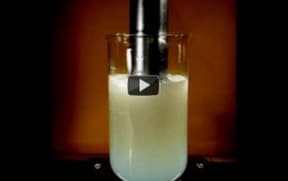
- Making a Translucent Nanoemulsion with ISP-3000 in the Flow-Through Mode
Ebooks
- MAKING STABLE EMULSIONS: A Guide to Formulation and Processing Conditions Optimization

Presentations
- Drug Nano-Milling by Scalable High-Amplitude Ultrasound

Presentations
- High-Intensity Ultrasonic Liquid Processing



Frequently Asked Questions
What is ultrasonic processing used for in pharmaceutical manufacturing?
Ultrasonic processing produces uniform nanocarriers such as nanocrystals, nanoemulsions, and liposomes, and performs cell disruption (lysis) to extract active ingredients from biomass. These steps help overcome the poor water solubility that limits many drug compounds.
How does nanotechnology improve poorly soluble drugs?
Up to 40% of available bioactive substances, and up to 70% of those in development, have poor water solubility, which lowers bioavailability and delays onset. Formulating them as nanocrystals, nanoemulsions, or liposomes increases dissolution and absorption, improving therapeutic performance.
What is liposome drug production with ultrasound?
Liposomes are lipid vesicles that encapsulate active ingredients for targeted delivery. High-intensity ultrasonic cavitation reduces and homogenises lipid structures into uniform liposomes, providing a simple, reproducible production method on lab, bench, and industrial scales.
Can ultrasonic systems be used for cell disruption and extraction?
Yes. The strong shear forces generated by ultrasonic cavitation rupture yeast, bacterial, and plant cell walls, releasing recombinant proteins, medicinal oils, and other bioactive substances for downstream processing.
How is consistency maintained when scaling up?
Industrial Sonomechanics processors use patented Barbell Horn Ultrasonic Technology (BHUT), which preserves the required amplitude as equipment size increases, so processes validated in the lab transfer to production with reproducible, high-quality results.